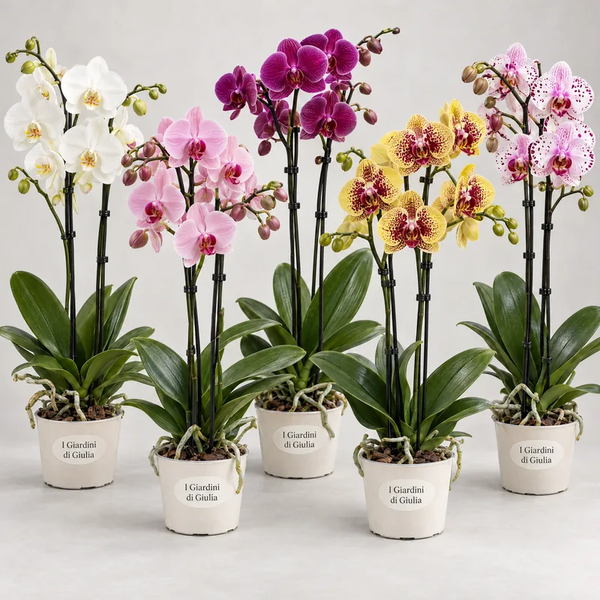
The Phalaenopsis, known as the moth orchid or butterfly orchid, is the most beloved indoor orchid for the elegance of its flowers and its flowering period, which lasts for weeks. This specimen, approximately 80 cm tall, with long, arched stems laden with flowers, is a refined gift and adds a touch of color to the home and office.
Phalaenopsis Features
-
Phalaenopsis orchid: large butterfly-shaped flowers on long, slender stems, above broad, glossy green, fleshy leaves.
- Total height of approximately 80 cm, with a 12 cm diameter pot.
- Assorted mixed colors: we select the flower color based on availability.
- Long-lasting flowering, which can last from 6 to 12 weeks.
- Non-toxic to dogs and cats: a worry-free choice for those with pets.
Phalaenopsis Care Tips
-
Light: Bright but indirect light, near a bright window; direct sunlight can burn the leaves and flowers.
-
Water: Water approximately once a week, when the roots in the transparent pot turn silver. Immerse the pot for 10 minutes and let it drain thoroughly: water must never be allowed to stagnate.
-
Temperature: Ideal between 18°C and 25°C, away from cold drafts and direct heat sources.
-
Humidity: It prefers moderate humidity; mist the leaves, not the flowers, in very dry environments.
-
Fertilizing: Every 2-3 weeks, using a specific orchid fertilizer at a reduced dosage.
-
After flowering: Cut the stem above the second node to encourage new flowering, or at the base if it is dry.
-
Placement: Perfect for living rooms, offices, bedrooms, and bright bathrooms.
Frequently Asked Questions About Phalaenopsis
How do you care for a Phalaenopsis orchid at home?
Phalaenopsis needs bright but indirect light, watering by immersion approximately once a week, and an environment without temperature fluctuations. With this care, it can bloom again several times a year.
How often should you water an orchid?
Generally once a week, when the roots turn silver. In winter, the intervals become longer. It is better to water too little than too much: excess water causes the roots to rot.
How can you make Phalaenopsis bloom again?
After flowering, cut the stem above the second node and move the plant to an environment that is slightly cooler at night for a few weeks: the temperature difference stimulates the growth of a new flowering stem.
Why does the orchid have yellow leaves?
An occasional yellowing lower leaf is normal. If several leaves turn yellow, the most common cause is excess water or direct sunlight.
Is the Phalaenopsis orchid toxic to cats and dogs?
No, Phalaenopsis is considered non-toxic to dogs and cats, making it one of the most suitable flowering plants for people who live with pets.