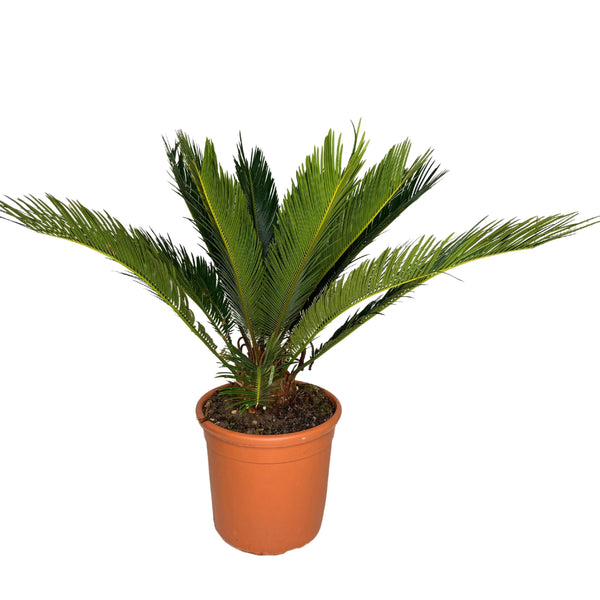
The Cycas Revoluta is an ornamental evergreen plant with great visual impact, ideal for those seeking elegance and resilience. With its intensely green feathery fronds, this Japanese sago palm is perfect for creating refined green backdrops on terraces, balconies, in the garden, or even as a houseplant.
Appreciated for its classic aesthetic and remarkable resilience, the Cycas Revoluta adapts well to various conditions, making it an excellent choice for both experts and beginners. It lends a majestic and orderly touch to any space, enhancing the environment with its distinctive presence.
Yellow leaves can indicate overwatering, nutrient deficiency, or insufficient light exposure. Check care conditions and adjust accordingly.
To best care for your Cycas Revoluta, ensure it receives plenty of light, water regularly without stagnation, and protect it from intense cold. A balanced fertilization in spring-summer promotes growth.
The Cycas Revoluta has slow growth, taking many years to reach significant dimensions. Under optimal conditions, it can exceed one meter in height, but in a pot, growth is more contained.
I terrarium viaggiano su pallet dedicato. Puoi procedere in due modi alternativi: