


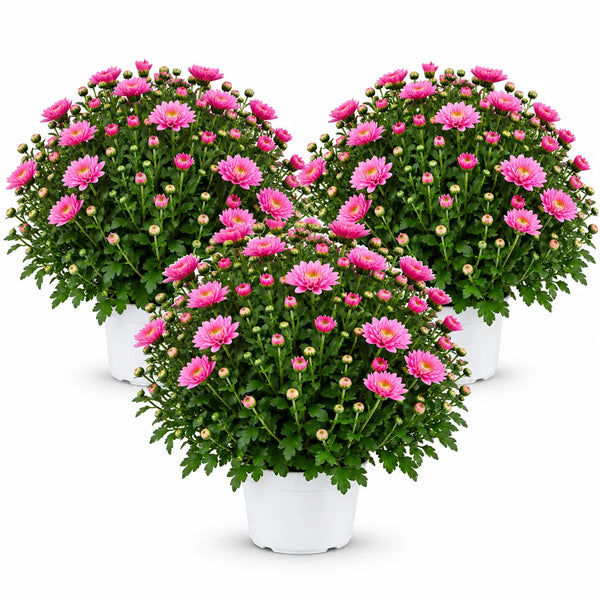
The Chrysanthemum (Chrysanthemum morifolium) is the flower that embodies autumn more than any other: when other balcony plants have finished their season, it forms a large cushion covered with flowers in warm, intense colors that remain open for weeks. This large specimen, approximately 45 cm tall in a pot 19 cm in diameter, has a broad, full canopy that makes an immediate impact: it is ideal for balconies, terraces, entrances, flower beds and planters, and is the traditional plant for All Saints' Day and All Souls' Day in early November.
Mixed colors: the chrysanthemum is offered in assorted colors. The flower color cannot be chosen: when the order is placed, plants are selected according to current availability. In multipacks, the colors may vary. Images are indicative of the available varieties.
It is the large format: the plant is approximately 45 cm tall, including the pot, and is grown in a pot 19 cm in diameter. It has a broad, flowering canopy, suitable for filling a planter on its own or decorating an entrance. For smaller spaces, a chrysanthemum in a 14 cm pot, approximately 30 cm tall, is also available.
No, the chrysanthemum is sold in mixed colors. When the order is placed, plants are assigned according to current availability, always selecting healthy specimens that are flowering or have buds ready to open. In multipacks, the colors may vary.
The chrysanthemum is an outdoor plant: it flowers longer outdoors, in the sun and cool air. Indoors, with the heating on, flowering lasts much less. It can be brought indoors for a few days, for example as a decoration, and then returned outdoors.
Generally 4 to 6 weeks, depending on the temperature and location. Regular watering, good light and removing spent flowers help prolong flowering.
In a 19 cm pot, an average of twice a week in autumn, less during rainy or cold periods. The potting soil should be kept slightly moist: if it dries out completely, the plant wilts quickly.
The most common cause is lack of water, followed by waterlogging in the saucer or a location that is too dark and warm. Water thoroughly if the potting soil is dry, empty the saucer and move the plant to a bright, cool location.
At the end of flowering, cut the stems back to 10-15 cm and let the plant rest in a sheltered location during winter. In spring, repot it or plant it in the garden, and pinch the tips of new shoots until early July: you will get a fuller plant and new flowering in autumn.
Yes, chrysanthemums are toxic to cats, dogs and other pets if ingested, so it is advisable to place them out of their reach.
Read more on our blog:

