


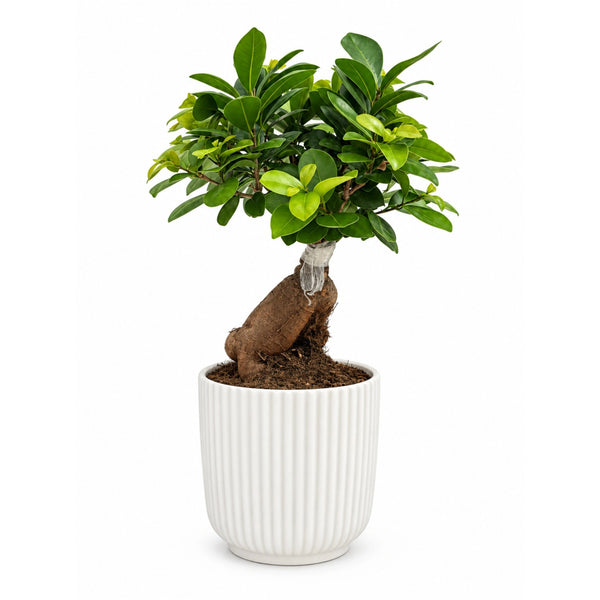
The Ficus Ginseng Bonsai in a white ribbed Pitti pot, 40 cm tall, is a compact and striking indoor plant: its sinuously shaped trunk supports a dense crown of glossy green leaves. The contrast between the plant's organic profile and the pot's clean lines creates an elegant arrangement that fits easily into both modern interiors and more traditional spaces.
Place it on a desk, shelf, or side table: even a simple corner immediately gains character and a natural touch. Its compact shape makes it a lovely choice for decorating your home or office, or as a gift for plant lovers.
The Ficus Ginseng Bonsai prefers a bright spot with indirect light, such as near an east- or north-facing window, away from radiators and drafts.
Water it when the surface of the soil feels dry to the touch: generally more often in spring and summer, and less often in winter. It is important to avoid stagnant water in the saucer.
Leaf loss is often related to temperature fluctuations, changes in location, insufficient light, or unbalanced watering. By maintaining stable conditions, the plant quickly recovers.
I terrarium viaggiano su pallet dedicato. Puoi procedere in due modi alternativi:

