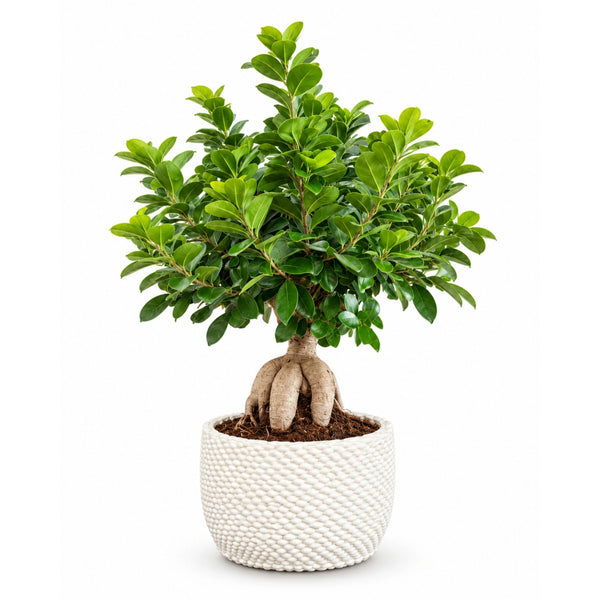
The Ficus Ginseng Bonsai (Ficus microcarpa) in the 60 cm version is a striking specimen: its bulbous, powerful aerial roots emerge from the substrate with sculptural force and support a sturdy trunk, from which a generous, dense canopy of small, bright green oval leaves develops.
Presented in the white Kira ceramic pot with a granular texture, it is a collector's piece capable of elegantly enhancing living rooms, entryways, offices, and formal spaces. An impressive gift idea for anyone who loves botanical design.
Features of the Ficus Ginseng Bonsai
-
Height: approximately 60 cm overall, a medium-large size ideal as a focal point in the room.
-
Pot: white Kira ceramic with a contemporary granular texture, 22 cm diameter.
-
Roots: aerial, bulbous, and powerful, a distinctive feature of the ficus ginseng bonsai.
-
Foliage: broad, dense canopy of small, bright green oval leaves.
-
Type: evergreen indoor bonsai.
Ficus Bonsai Care Tips
-
Light: bright indirect light, near the brightest window; avoid direct sunlight and frequent changes of position, which can cause leaf drop.
-
Watering: moderate, allowing the top 2-3 cm of substrate to dry between waterings; avoid waterlogging and prolonged drought.
-
Temperature: ideally between 18°C and 28°C, away from cold drafts and temperature fluctuations.
-
Humidity: mist the leaves regularly, especially in winter when the heating is on.
-
Fertilizing: every 3-4 weeks in spring and summer with fertilizer specifically for bonsai.
-
Pruning: shorten excess branches to maintain the shape and encourage branching; it also tolerates heavy pruning well.
What You Receive
- Ficus Ginseng Bonsai, approximately 60 cm in total height.
- White Kira ceramic pot, 22 cm diameter.
Frequently Asked Questions About the Ficus Ginseng Bonsai
Where should a large Ficus Ginseng Bonsai be placed?
A 60 cm specimen looks best as a focal point on a low cabinet, console table, or table, in a bright setting without direct sunlight and away from radiators and drafts.
How often should a Ficus Ginseng Bonsai be watered?
When the top 2-3 cm of soil feels dry to the touch: generally more often in spring and summer, and less often in winter. It is important to avoid standing water in the saucer.
Why is the Ficus Ginseng Bonsai losing leaves?
Leaf loss is often related to temperature fluctuations, changes of position, insufficient light, or unbalanced watering. By maintaining stable conditions, the plant recovers quickly.