Citrus myrtifolia – The fragrance of citrus in bonsai form
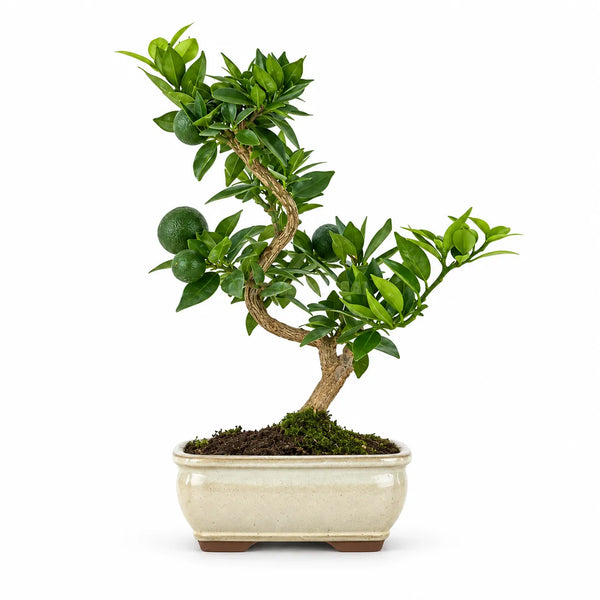
An elegant 7-year-old outdoor bonsai with unique sensory qualities. Citrus myrtifolia, known as chinotto, delights with its wonderfully fragrant flowers and small decorative fruits that add color to your garden or terrace all year round. Its compact, glossy leaves, reminiscent of myrtle leaves, make it one of the most prized species for ornamental bonsai.
Included in the kit: Bonsai + Citrus myrtifolia saucer.
Important notes: The bonsai's shape and dimensions are approximate (including the pot). The pot's color and shape may differ from the photographs. As these are living plants, their appearance changes with the seasons; the images are therefore for illustrative purposes only and do not constitute a contractual commitment.
Main features
-
Habitat: Outdoor
-
Leaf type: Evergreen
-
Flowers: Yes – highly aromatic flowers at dusk
-
Care level: Moderate
-
Family: Rutaceae
-
Approximate dimensions (width × depth × height): 24 × 17 × 31 cm
-
Pot size: Under 16 cm
Fun fact
Citrus myrtifolia is famous because its fruit is the main ingredient in Chinò, the celebrated Italian soft drink with a bitter, refreshing taste. A piece of Italian history on your balcony.
Placement
Place it outdoors in full light. The flowers are intensely fragrant at dusk, when pollinating insects are most active – a perfect example of natural symbiosis.
Watering
Water generously in summer and moderately in winter. Avoid wetting the flowers during flowering.
Fertilizing
From spring through fall, use Hiryo Gold organic-mineral fertilizer or Nutribonsai fast-acting fertilizer. Do not fertilize during flowering; resume once the fruits appear.
Repotting
Every 2 years, in the last days of winter or early spring. After repotting, we recommend watering with Mistral Bonsai's Vitabonsai revitalizer to help the plant recover.
Substrate
Terrabonsai – special bonsai substrate that meets water and nutrient requirements, promoting root development and overall vigor. Alternatively: 60% Kiryuzuna + 40% Akadama, which promotes growth but requires more frequent watering.
Pinching
When the shoot has grown 4-6 pairs of leaves, cut it back, leaving 1-2 pairs.
Wiring
Can be done year-round; take care in spring, when growth is faster, to avoid marking the bark.
What you receive
- Contents: bonsai + saucer.
- Dimensions: approximately 24 × 17 × 31 cm (width × depth × height), including the pot.
- Pot: under 16 cm.