Juniperus chinensis Kyushu – The Coniferous Elegance of Chinese Juniper
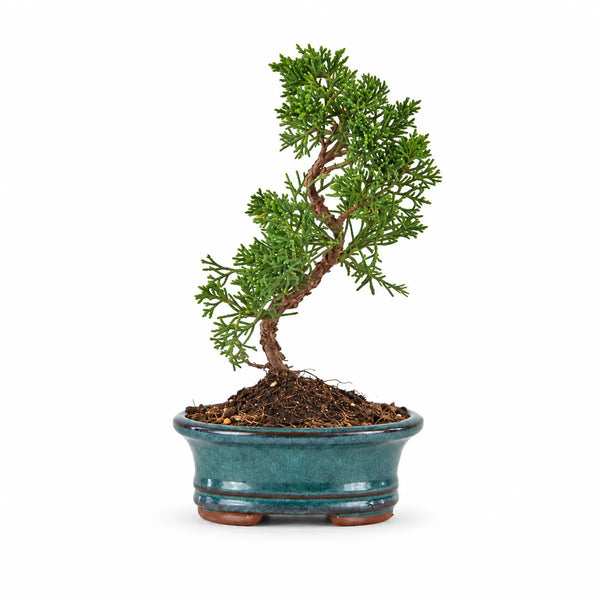
A 7-year-old outdoor bonsai with a refined silhouette and slow, harmonious growth. Juniperus chinensis Kyushu, known as Chinese juniper, is one of the most beloved conifers in the world of bonsai: its compact, deep-green foliage and elegantly peeling bark make it a visually striking specimen, perfect for balconies, gardens, and terraces.
Important notes: The shape and dimensions of the bonsai are approximate (including the pot). The color and shape of the pot may differ from the photographs. As living plants, their appearance changes with the seasons; the images are therefore for illustrative purposes only and do not constitute a contractual obligation.
Key features
-
Genus: Juniperus
-
Habitat: Outdoors
-
Leaf type: Evergreen
-
Care level: Moderate
-
Family: Cupressaceae
-
Approximate dimensions (width × depth × height): 12 × 11 × 23 cm
-
Pot size: Under 16 cm
Interesting fact
Juniper berries are used in cuisines around the world to flavor game, sauces, and marinades. But the best-known fact? Juniper is the main botanical ingredient in gin, the famous Anglo-Saxon spirit now enjoyed worldwide.
Position
Place it in full sunlight outdoors all year round. Juniperus chinensis loves direct sunlight and fresh air: it is not suitable for indoor living.
Watering
Abundant in summer, moderate in winter. Absolutely avoid waterlogging. Juniper benefits from misting the foliage with water, which promotes its well-being and keeps the foliage fresh and vigorous.
Fertilization
In spring and autumn, use Hiryo Gold organo-mineral fertilizer or the fast-acting Nutribonsai fertilizer.
Repotting
Every 3-5 years, at the beginning of spring. After repotting, we recommend watering with Mistral Bonsai’s Vitabonsai revitalizer to help the plant recover.
Substrate
Terrabonsai – a special bonsai substrate that meets water and nutrient requirements while promoting root development and overall vigor.
Pruning
From October to March, during the vegetative rest period.
Pinching
Throughout the growing season: pinch the tips of new shoots with your fingers to maintain a compact shape. Avoid making overly drastic interventions all at once, so as not to stimulate unwanted juvenile, needle-like growth.
Wiring
Can be carried out all year round, preferably from October to March. Take care in spring, when growth is faster, to avoid marks on the bark.
What you receive
- Plant height: approximately 23 cm, including the pot.
- Measurements: width 12 cm, depth 11 cm (approximate dimensions).