Quercus suber – The cork oak, a thousand-year-old bonsai for your garden
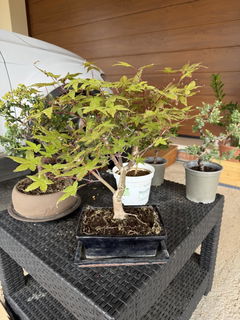
An outdoor bonsai that is 24 years old, with a majestic presence and an ancient character. Quercus suber, known as the cork oak, is one of the most fascinating oaks of the Mediterranean basin: evergreen, slow-growing, and exceptionally long-lived. What makes it unique is its bark: thick, rough, and soft to the touch—the famous cork, which naturally regenerates over time. A tree that tells the story of decades of life and becomes, in bonsai form, a piece of living art.
📌 Important notes: The bonsai’s shape and dimensions are approximate (including the pot). The color and shape of the pot may differ from the photographs. As living plants, their appearance changes with the seasons; the images are therefore for illustrative purposes only and do not constitute a contractual commitment.
Main characteristics
-
Habitat: Outdoors – full sunlight all year round
-
Leaf type: Evergreen
-
Family: Fagaceae
-
Growth: Slow, with great longevity
-
Approximate dimensions (diameter × height): 35 × 70 cm
-
Pot dimensions: Under 16 cm
Interesting facts
The bark of Quercus suber is the cork we all know: lightweight, waterproof, thermally insulating, and completely renewable. Its extraction does not harm the tree—the bark grows back every 9–12 years. Cork has been used for centuries to seal wine bottles, as well as in construction, the aerospace industry, and fashion. Having a cork oak in bonsai form means caring for a piece of extraordinarily useful and sustainable nature.
Position
Place it outdoors in full sunlight all year round. Quercus suber is the quintessential Mediterranean species: it loves warmth, direct sunlight, and open air. It tolerates brief frosts but must be protected from prolonged and intense cold.
Watering
Moderate and regular: the cork oak is naturally adapted to periods of drought. Allow the substrate to dry out between waterings. Reduce watering significantly in winter and avoid waterlogging at all costs.
Fertilization
From spring to autumn, use the Hiryo Gold organic-mineral fertilizer or the fast-acting Nutribonsai fertilizer. Stop fertilizing in winter during the plant’s dormant period.
Repotting
Every 3–5 years, in spring before vegetative growth resumes. The oak has a robust root system that requires adequate space. After repotting, it is recommended to water with Mistral Bonsai’s Vitabonsai revitalizer to speed up the plant’s recovery.
Substrate
Terrabonsai – a special bonsai substrate that meets water and nutritional requirements, promoting root development and overall vigor. Alternatively: 60% Kiryuzuna + 40% Akadama, which provides excellent drainage.
Pruning
During the winter months, while the plant is dormant. Make clean cuts, always leaving buds on the branch to ensure regrowth in spring.
Pinching
During the growing season: when a shoot has developed 4–6 leaves, cut it back leaving 1–2 leaves to encourage branching and maintain a compact shape.
Wiring
Can be carried out all year round, preferably in spring. Pay attention to the faster spring growth to prevent marks on the corky bark, which is particularly sensitive.