Pinus thunbergii – Japanese Black Pine, a Symbol of Masculinity and Vigor
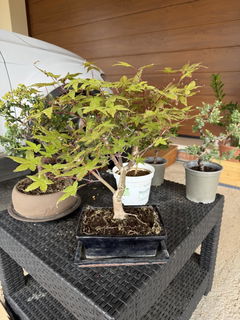
A 12-year-old outdoor bonsai with an imposing presence and unmistakable character. Pinus thunbergii, known as the Japanese Black Pine, is one of the most highly regarded coastal conifers in the world of bonsai: vigorous growth, dark, rigid needles grouped in pairs, and deeply textured, rugged bark. In Japan, this species is traditionally considered masculine, owing to its austere form, the strength of its roots, and the intense dark green of its needles.
📌 Important notes: The shape and dimensions of the bonsai are approximate (including the pot). The color and shape of the pot may differ from the photographs. As living plants, their appearance changes with the seasons; the images are therefore purely illustrative and do not constitute a contractual commitment.
Main characteristics
-
Habitat: Outdoors – full sunlight, year-round
-
Leaf type: Evergreen (needles in pairs)
-
Family: Pinaceae
-
Growth: Vigorous
-
Approximate dimensions (width × depth × height): 28 × 26 × 41 cm
-
Pot dimensions: Under 16 cm
Interesting facts
In Japanese tradition, Pinus thunbergii embodies masculine energy: its vigorous growth, rough bark texture, intense color, and rigid needles make it a symbol of strength and determination. It is also one of the bonsai species with the greatest need for direct sunlight: it loves unfiltered sun.
Position
It must be kept outdoors, in full sunlight all year round. Ideal for sunny balconies, gardens, and terraces. Not suitable for indoor living.
Watering
Controlled and moderate. Excess water, especially in poorly draining substrates, can be fatal to mycorrhizae – symbiotic fungi whose hyphae live in close association with the pine’s roots, enhancing their absorption of minerals such as phosphorus. Without them, the tree gradually weakens and eventually dies.
Fertilization
In spring and autumn. Organic fertilizers are preferred, as they support and protect mycorrhizae.
Repotting
Every 3 years, when vegetative growth resumes, before the needles open inside the buds. In Mediterranean regions, approximately in mid-March.
Substrate
100% Kiryuzuna, or mixed with 50–70% Akadama.
Pruning
During the colder months of the year. Always leave needles and buds on the branches when cutting: a completely bare branch tends to dry out.
Candle pinching
Work gradually as the needles develop:
- During the growing season, remove the longest main shoots, shortening the new candles by one-third to one-half
- In late summer or early autumn, remove old needles and overcrowded twigs to encourage light penetration into the canopy
Wiring
From October to March. Copper wire is recommended: pines are very flexible trees, and the wire must remain in place for a long time to be effective in shaping the branches.