


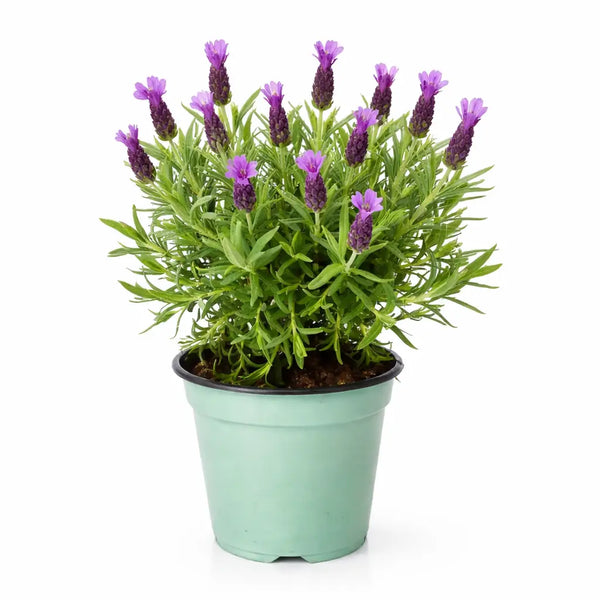
The 14 cm pot English Lavender plant (Lavandula angustifolia) is an evergreen aromatic shrub with blue-purple flowers and an unmistakable fragrance. It is ideal for anyone looking to enhance balconies, terraces, and gardens with a plant that is resistant to sun and drought and requires little maintenance.
It loves full sun: choose a bright, sunny spot for at least 6-8 hours a day.
In summer, water once or twice a week, waiting for the potting soil to begin drying out before watering again. In winter, keep the soil fairly dry. Always avoid standing water, which encourages root rot.
It needs fast-draining soil; for potted plants, a substrate containing up to 25% coarse grit is ideal. It tolerates alkaline or chalky soils well. If you notice signs of root rot, improve drainage.
It is a hardy plant, but does not like excessive moisture: protect it from winter rain.
Prune lightly after flowering to maintain its shape and encourage new blooms.
A lot: it should be kept in full sun, in a sunny spot for at least 6-8 hours a day.
Once or twice a week in summer, when the potting soil begins to dry out; in winter, the soil should be kept fairly dry, avoiding standing water.
After flowering, with light pruning that maintains its shape and encourages new blooms.
Fast-draining soil; for pots, a substrate containing up to 25% coarse grit is ideal. It tolerates alkaline or chalky soils.
I terrarium viaggiano su pallet dedicato. Puoi procedere in due modi alternativi:

