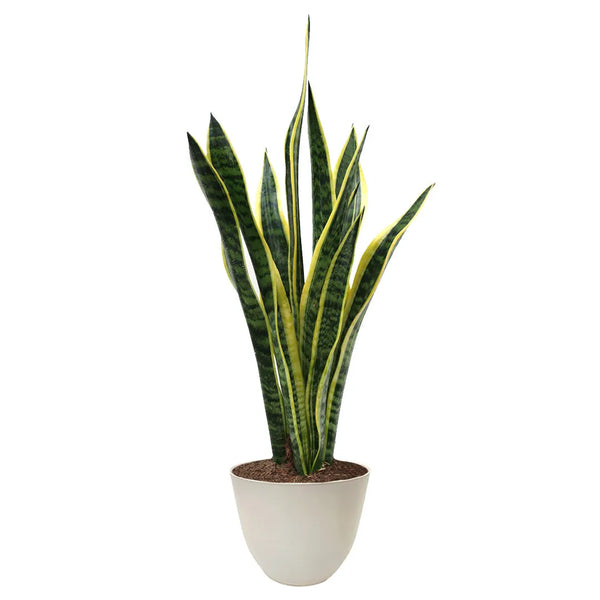
Sansevieria Laurentii (Dracaena trifasciata), also known as snake plant, is a 60 cm tall houseplant with upright leaves striped green and edged in yellow. It is ideal for anyone looking for a striking yet easy-care plant, even with little experience, for the home or office.
Features
- Plant height: 60 cm.
- 17 cm diameter pot, suitable for placing in a decorative cachepot.
- Available versions: without a pot, anthracite pot, ivory pot, rosemary green pot, and taupe pot.
- Variegated leaves with yellow edges and a modern design.
- Perennial plant from the Asparagaceae family, native to tropical West Africa.
How to care for it
Light
It prefers bright indirect light but also tolerates low light, so it adapts to almost any corner of the home. For optimal growth, keep it in a well-lit area away from direct sunlight.
Water
Water only when the soil is completely dry: approximately every 7 days in summer and every 14 days in winter. Check the soil moisture with a finger or meter to avoid overwatering.
Temperature and humidity
It thrives between 18 and 25 °C and should not be exposed to temperatures below 10 °C; avoid cold drafts. It prefers average humidity, between 40% and 60%.
Fertilizer and soil
In spring and summer, fertilize every 30 days with a balanced liquid fertilizer. Use well-draining soil, such as a mix of all-purpose potting soil, sand, and perlite, and a pot with adequate drainage holes to prevent root rot.
Propagation
It can be propagated by division, the quickest and simplest method, or by leaf cuttings, which require more patience because the roots take time to develop.
Why choose it
- At 60 cm, it makes a striking statement while requiring little care.
- It also tolerates low-light corners.
- Suitable for living rooms, bedrooms, and offices.
- You can choose it without a pot or with a pot in your preferred color.
What you receive
- Plant height: 60 cm.
- Pot diameter: 17 cm.
- Available options: without a pot, anthracite pot, ivory pot, rosemary green pot, taupe pot.
Frequently asked questions
Where should I place Sansevieria Laurentii?
In a spot with bright indirect light, away from direct sunlight. It also tolerates low-light areas, making it suitable for living rooms, bedrooms, and offices.
How often should Sansevieria Laurentii be watered?
Only when the soil is completely dry: approximately every 7 days in summer and every 14 days in winter, avoiding standing water.
Does Sansevieria Laurentii continue to grow taller?
Yes: it develops new leaves from the center of the rosette and, under optimal conditions, can eventually exceed 60 cm.
How is Sansevieria propagated?
By division, the quickest and simplest method, or by leaf cuttings, which take longer to root.
Read also on our blog:
- Online Plant Sales: The Complete Guide to Buying Safely
- Biophilia in the Office: Transform Your Work-from-Home Setup with Plants
- Sansevieria and Humidity: The Complete Guide to Keeping Your Plant Healthy
- Caring for Houseplants: The Complete Guide to Lush Greenery at Home
- The 7 Most Resilient and Striking Houseplants of 2026
- Watering Houseplants: The Guide to a Perfect Green Thumb
- Plants for Small Spaces: How to Furnish a Studio or One-Bedroom Apartment with the Right Greenery
- Leaves Burned Behind Glass: Why the Italian Summer Sun “Cooks” Your Houseplants Right Where You Thought They Were Safe
- €4 Plants Don’t Exist. There’s Only Someone Paying Instead of You.
- Bedroom Plants: The 7 Best for Better Sleep (and Why They Really Work)
- Plants for Your Home Office: 10 Choices That Improve Concentration, Air Quality, and the Pleasure of Working
- Dracaena with Dry or Brown Tips: Causes, Remedies, and How to Trim Them Without Damaging the Plant
- Plants on Vacation: How to Leave Them Before You Go (So You Don’t Find Them Dead When You Return)
- Plants After Vacation: The Diagnostic Guide to Understanding What Can Be Saved (and How, Without Panic)
- Biophilic Design: Integrating Nature into Your Interior Decor
- Plants for Your Home Entryway: Greenery That Welcomes You (and 8 Species That Really Work)
- Plant SOS After Vacation: Throw Away or Save? The 5-Test Diagnostic Method
- Low-Light Houseplants: The 15 Best Plants That Thrive in the Shade
- Plants for Windowless Bathrooms: 12 Species That Really Work (and How Not to Kill Them)
- Office Plant Care Guide: Your Greenery in a Work Environment
- How to Clean Houseplant Leaves Without Suffocating Them
- Plants in Workspaces: Why They Really Matter and How to Choose the Right Ones
- Bedroom Plants and Sleep: What Science Really Says (and What It Doesn’t)
- October Plants for Entryways and Living Rooms: 8 Choices That Redesign Your Home Before Winter
- Plants for the Kitchen: 7 Species That Love Humidity (and How to Position Them)
- Light for Plants in Autumn: Where to Place Them Without Moving Them at Random
