Taxus media – The yew, the millennia-old conifer with a majestic form
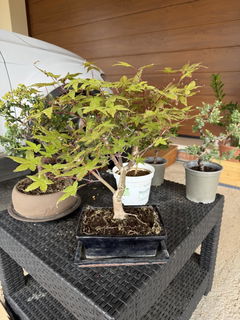
An outdoor bonsai aged 9 years, with legendary longevity and an ancient character. Taxus media, a cross between the European and Japanese yew, is one of the longest-lived conifers in the world: in the wild, specimens over 1,000 years old can be found. With its slow growth and dark, compact evergreen foliage, it lends a quiet, authoritative presence to any outdoor space.
✅ Included in the kit: Taxus media bonsai + saucer.
📌 Important notes: The shape and dimensions of the bonsai are approximate (including the pot). The color and shape of the pot may differ from the photographs. As these are living plants, their appearance changes with the seasons; the images are therefore purely illustrative and do not constitute a contractual commitment.
Main features
-
Habitat: Outdoors – full sunlight, all year round
-
Leaf type: Evergreen
-
Family: Taxaceae
-
Growth: Slow, with great longevity
-
Approximate dimensions (width × depth × height): 31 × 27 × 35 cm
-
Pot size: Under 16 cm
Interesting facts
Taxus is one of the longest-lived trees on the planet: in the wild, centuries-old specimens can be found, some over 1,000 years old. Its wood is extremely hard and dense, yet extraordinarily elastic and flexible – qualities that made it the preferred material in ancient times for constructing war and hunting bows.
Position
Place it outdoors in full sunlight all year round. Taxus needs both sunlight and winter cold to produce its characteristic red fruits. Not suitable for growing indoors.
Watering
Abundant in summer, moderate in winter. Avoid waterlogging, always ensuring that the substrate has good drainage.
Fertilization
In spring and autumn with the organo-mineral fertilizer Hiryo Gold or the fast-acting fertilizer Nutribonsai.
Repotting
Every 3–5 years, at the beginning of spring. After repotting, watering with Mistral Bonsai’s Vitabonsai revitalizer is recommended to speed up the plant’s recovery.
Substrate
Terrabonsai – a special bonsai substrate that meets water and nutritional requirements, promoting root development and overall vigor.
Pruning
During winter. When cutting, always leave leaves and buds on the branch: a completely bare branch tends to dry out.
Pinching
In spring: pinch the new shoots with your fingers during the growing season to encourage branching. If you want the plant to bear fruit, wait until flowering has finished before intervening.
Wiring
From September to March, during the plant’s dormant period.