Olea europaea sylvestris – The Wild Olive, an Eternal Symbol of the Mediterranean
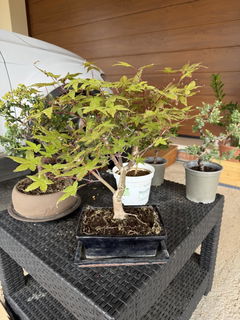
A 9-year-old outdoor bonsai, steeped in history and in that quiet beauty that only Mediterranean trees can convey. Olea europaea sylvestris, the wild olive, is one of the oldest and most beloved species in the world: its slow and steady growth gives rise to a bonsai with an authentic character, with a trunk that already tells the story of years of life. Its name derives from the Latin oleum, oil – a tribute to the most precious gift of this extraordinary plant.
📌 Important notes: The shape and dimensions of the bonsai are approximate (including the pot). The color and shape of the pot may differ from the photographs. As living plants, their appearance changes with the seasons; the images are therefore purely illustrative and do not constitute a contractual obligation.
Main features
-
Habitat: Outdoor
-
Leaf type: Evergreen
-
Family: Oleaceae
-
Growth: Slow and steady
-
Approximate dimensions (width × depth × height): 23 × 15 × 29 cm
-
Pot dimensions: Under 16 cm
Interesting facts
For millennia, the olive tree has been a symbol of peace, victory and chastity. In Ancient Rome, it was the emblem of victorious warriors; in ancient Greece, the prize awarded to winners of the Olympic Games was a crown of olive branches. Having an olive bonsai means carrying a piece of human history with you.
Position
In a Mediterranean climate, place it outdoors in full sunlight all year round. Protect it from excessive heat and, above all, frost. In winter, it requires a sharp temperature drop to between 5 and 7 °C to encourage fruit production in the following season.
Watering
The olive tree has minimal water requirements: it is a species naturally adapted to drought. Water moderately, allowing the substrate to dry thoroughly between waterings. Avoid waterlogging at all costs.
Fertilization
From spring to autumn, use the organo-mineral fertilizer Hiryo Gold or the fast-acting fertilizer Nutribonsai.
Repotting
The olive tree grows very slowly, and its root system also develops gradually. With a suitable substrate and adequate fertilization, repotting will not be necessary for 3–5 years. After repotting, it is recommended to water with Mistral Bonsai’s revitalizer Vitabonsai to accelerate the plant’s recovery.
Substrate
Terrabonsai – a special bonsai substrate that meets water and nutritional requirements, promoting root development and overall vigor.
Pruning
In March, before the spring vegetative growth resumes.
Pinching
From April to October: when the shoot reaches 7–8 pairs of leaves, pinch it back to leave 2–3 pairs.
Wiring
Can be carried out all year round, taking care during spring growth to avoid marks on the bark.