arredamento green
Pilea Peperomioides: The Coin Plant That Brings Luck and Style to Your Home
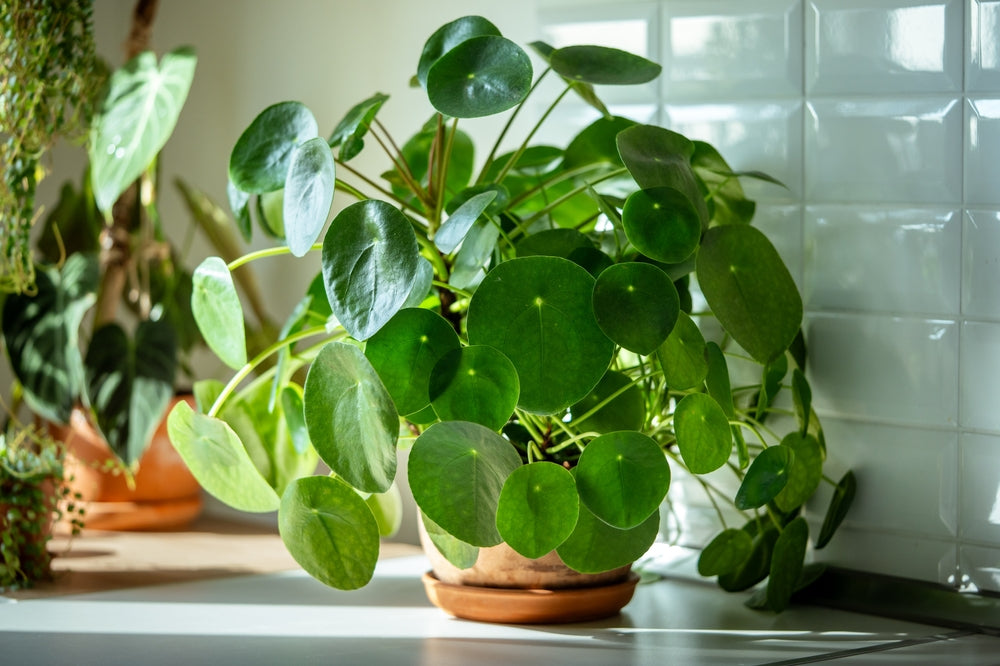
In the vast universe of houseplants, few stars shine with the same intensity as the Pilea Peperomioides. Affectionately known as the Chinese Money Plant, this design icon has conquered apartments, offices, and Instagram feeds worldwide, becoming a true symbol of style and well-being. Its unmistakable round leaves, resembling small green coins or friendly flying saucers, not only add a touch of minimalist elegance to any environment but also carry a fascinating history and a promise of luck and prosperity.
But what makes the Pilea so special? It's not just its unique aesthetics that make it one of the most desired plants of the moment. It's its incredible resilience, its surprising ease of cultivation, and, above all, its generous nature. The Pilea is a plant that loves to be shared, spontaneously producing new plantlets, or "babies," ready to be given away, thus spreading a message of friendship and abundance.
In this comprehensive guide, we will go beyond simple care tips. We will explore together the adventurous history that brought this plant from the remote mountains of China to our living rooms, uncover the botanical secrets that make it so unique, and delve into the most effective cultivation techniques to ensure it a long and thriving life. Whether you are a green world novice or an experienced collector, get ready to discover everything, absolutely everything, about the Pilea Peperomioides, the superstar that will transform your home into an oasis of style and luck.
From China to Europe: The Adventurous History of the Missionary Plant
Every plant has a story, but that of the Pilea Peperomioides seems straight out of an adventure novel. Unlike many other houseplants, its global spread did not occur through traditional commercial channels, but thanks to botanical word-of-mouth that made it a true symbol of friendship and sharing. This deliberately in-depth chapter will make you appreciate every single leaf of your plant even more.
The Discovery in the Mountains of Yunnan
Our story begins at the beginning of the 20th century. The first Westerner to document the Pilea Peperomioides was the Scottish botanist George Forrest, during his expeditions in the remote Chinese provinces of Yunnan and Sichuan between 1906 and 1910. Forrest collected specimens of this unknown plant, which were stored in European herbariums, but remained a botanical mystery for decades, without being identified or thoroughly studied.
The Journey of the Norwegian Missionary
The real breakthrough came in 1945. Agnar Espegren, a Norwegian missionary, was in Yunnan province when, during a journey, he came across the Pilea. Fascinated by its unique shape, he took a cutting with him and brought it back to Norway in 1946. This is where its nickname "Missionary Plant" originates.
Instead of jealously guarding it, Espegren began sharing the small plantlets his Pilea produced with friends and family throughout Scandinavia. This generosity sparked a chain of "green word-of-mouth": anyone who received a Pilea, in turn, gave away its "offspring." For this reason, it is also known as the "Friendship Plant" or "Pass-it-on-Plant."
For decades, the Pilea spread in this informal way throughout Europe, from house to house, without ever being available in shops or nurseries. It was a plant that could only be obtained through a friend or acquaintance, a green treasure exchanged as a token of affection. It wasn't until the 1980s that botanists at Kew Gardens in London finally managed to correctly identify it, connecting it to the original specimens collected by George Forrest almost 80 years earlier.
The Instagram Superstar

The advent of social media, and Instagram in particular, transformed the Pilea from a "secret" plant into a global phenomenon. Its photogenic nature, clean lines, and minimalist appearance made it the perfect protagonist for the #urbanjungle aesthetic. Hashtags like #pileapeperomioides and #chinesemoneyplant gather hundreds of thousands of posts, creating a worldwide community of enthusiasts who share tips, photos, and cultivation successes.
Today, the Pilea Peperomioides is no longer a secret. It is readily available and continues to be one of the most loved and sought-after houseplants, but its unique history gives it a charm that goes far beyond simple aesthetic beauty. Owning a Pilea means being part of a tradition of sharing and friendship that has lasted for over 70 years.
Botanical Characteristics: The Anatomy of a Unique Plant
Understanding the botany of Pilea Peperomioides is the first step to becoming an expert cultivator. Knowing its family, structure, and the functions of its parts helps us interpret its needs and ensure it the best living conditions. It belongs to the Urticaceae family, the same as nettles, but do not fear: it is completely harmless and devoid of stinging hairs.
Coin-like Leaves: The Plant's Solar Panels
The most distinctive feature of the Pilea is undoubtedly its leaves. Perfectly round (peltate), smooth, and fleshy, they can reach a diameter of 10-15 cm in mature and well-cared-for specimens. Each leaf is supported by a long, slender petiole that inserts almost in the center of the leaf blade, giving it the typical "flying saucer" or "pancake" appearance.
These leaves are not only beautiful but are true solar panels. Their flat and wide surface is optimized to capture the maximum amount of indirect light, essential for photosynthesis. Their ability to orient themselves towards the light source is an immediate visual indication of its needs: a Pilea that grows tilted is seeking more light.
Stem and Growth

The stem of the Pilea is erect, green in color, which tends to lignify and turn brownish at the base with age. In optimal conditions, growth is surprisingly rapid, with the plant easily doubling its size in just one year, producing new leaves from the apex regularly during the growing season.
Over time, older leaves at the base of the stem naturally yellow and fall off, leaving small scars. This process is normal and contributes to creating a bare stem which, in some mature specimens, takes on an appearance similar to that of a small stylized palm.
Flowering: A Rare but Possible Event
Many do not know that Pilea Peperomioides can flower. Flowering indoors is a rather rare event, occurring only in mature plants and under perfect growing conditions, often stimulated by a period of winter dormancy with slightly lower temperatures. The flowers are small, inconspicuous, greenish-white or pinkish, gathered in delicate paniculate inflorescences. Although not as spectacular as the leaves, seeing them sprout is a great satisfaction for any grower, a sign that the plant is truly happy.
Roots and "Babies": The Secret of Propagation
The root system is fibrous and relatively compact. The real magic, however, happens underground. The Pilea reproduces vegetatively through stolons, which are modified stems that grow horizontally underground. From these stolons, at a short distance from the mother plant, new complete plantlets emerge, the famous "babies" or suckers, which can be separated to create new specimens. Sometimes, plantlets can also sprout directly from the main stem, at the axil of fallen leaves.
Complete Guide to Pilea Care: All the Secrets to Making It Thrive
The popularity of Pilea comes not only from its beauty but also from its reputation as an "easy" plant. While it is true that it is a tolerant plant, to truly see it thrive, with large, round leaves and vigorous growth, it is essential to provide it with the right care. This section delves into every aspect of its cultivation, transforming you from simple owners to true Pilea experts.
Care Summary Table
|
Parameter
|
Ideal Specification
|
|
Light
|
Plenty of bright, indirect light. No direct sun.
|
|
Temperature
|
18-25°C. Avoid temperatures below 10°C.
|
|
Watering
|
When the top 3-4 cm of soil are dry.
|
|
Humidity
|
Average (40-60%). Does not require high humidity.
|
|
Potting soil
|
Draining, for green plants with added perlite.
|
|
Fertilization
|
Every 4-6 weeks in spring/summer.
|
|
Toxicity
|
Non-toxic to dogs, cats, and children (Pet-Friendly).
|
Light: The Key Factor for Perfect Leaves
Light is the most important ingredient for your Pilea's happiness. It loves very bright environments, but direct sunlight, especially during the central hours of summer days, can be fatal, causing burns on the leaves or their unsightly yellowing.
The ideal position is near an East or West-facing window, where it receives gentle morning or late afternoon light. A South-facing window can be fine in winter or if shielded by a sheer curtain. If you notice the plant tilting significantly towards the window, it's a clear sign that it's seeking more light. To ensure straight and harmonious growth, it's a good habit to rotate the pot 90 degrees every week.
An unequivocal symptom of insufficient light is leaves curling inwards, taking on a cup shape, and a disproportionately elongated stem (etiolation).
Temperature and Humidity: The Ideal Climate

Pilea Peperomioides thrives in typical indoor temperatures, between 18°C and 25°C. It is important to avoid sudden temperature changes and cold drafts, so keep it away from windows that are often opened in winter or from air conditioners. Although it can survive short periods with temperatures as low as 10°C, it absolutely does not tolerate frost.
Unlike many tropical plants, Pilea is not particularly demanding when it comes to humidity. Average household humidity (40-60%) is more than sufficient. There is no need to constantly mist it; in fact, excessive standing moisture on the leaves could encourage the onset of fungal diseases. Regular cleaning of the leaves with a damp cloth to remove dust will be much more appreciated.
Watering: The Balance Between Too Much and Too Little
The most common mistake in Pilea care is overwatering. Its roots are susceptible to root rot if left in constantly soggy soil. The golden rule is: water only when the soil is dry. To check, insert a finger into the soil about 3-4 cm: if it feels dry, it's time to water. If it's still damp, wait a few more days.
During spring and summer, its active growing season, it will need to be watered more frequently. In autumn and winter, however, watering should be reduced. It is always best to water thoroughly, soaking the entire substrate until water drains from the drainage holes, then allowing the soil to dry out almost completely before the next watering.
The Perfect Substrate: Drainage is the Watchword
Good substrate is essential to prevent waterlogging. Pilea needs a light, airy, and above all very well-draining soil. An ideal mix can be composed of:
•60% high-quality universal potting mix
•30% perlite or pumice (to increase drainage and aeration)
•10% peat or coir fiber
Always ensure that the chosen pot has adequate drainage holes at the bottom. A saucer filled with expanded clay pellets can help maintain a slightly more humid microclimate around the plant without the roots being in contact with stagnant water.
Fertilization: Nutrition for Growth
Being a fast-growing plant, Pilea is quite "greedy" during the growing season. To support the production of new leaves, it is advisable to fertilize it every 4-6 weeks from March to September. Use a liquid fertilizer for green plants, rich in nitrogen (N), the element that promotes leaf development. Dilute the fertilizer in irrigation water according to the instructions on the package. During winter, when growth slows, fertilization can be suspended or reduced to once every two months.
Repotting: When and How to Give Your Pilea More Space
Repotting is an important operation to provide new nutrients and more space for root growth. Generally, a young and rapidly growing Pilea should be repotted every year in spring. For more mature plants, every two years may be sufficient.
How to tell if it's time to repot?
1.Roots are growing out of the drainage holes.
2.Plant growth slows down dramatically.
3.The potting mix dries out too quickly.
Choose a pot slightly larger than the previous one (2-4 cm more is sufficient). A pot that is too large could retain too much moisture and increase the risk of root rot. During repotting, check the condition of the roots: if they are dark and mushy, remove the damaged parts before proceeding.
Multiplying Luck: The Complete Guide to Pilea Propagation
One of the greatest joys of owning a Pilea is its innate generosity. This plant, not coincidentally nicknamed "Friendship Plant," makes its multiplication incredibly easy, allowing you to create a small army of Pileas to give away or to populate other corners of your home. There are two main methods for propagating it: dividing suckers and stem cuttings.
Method 1: Division of Suckers (Pilea "Babies")
This is the most common and simplest method. The mother plant spontaneously produces small plantlets, called suckers or "babies," that sprout from the soil near the base or directly from the stem.
When to separate the suckers? It is essential to wait until the new plantlet is strong enough to survive on its own. The general rule is to wait until it has reached a height of at least 5-7 cm and has developed some leaves of its own.
How to proceed (Step-by-Step):
1.Preparation: Prepare a small pot with draining potting mix and lightly moisten it.
2.Location: Identify the point where the sucker connects to the mother plant or root. Gently dig around the base to expose the connection point.
3.Cutting: Using a sharp, disinfected knife or pruning shears, cut the small stem connecting the sucker to the mother plant, trying to preserve as many roots as possible attached to the "baby."
4.Planting: Immediately plant the sucker in the new pot, lightly compacting the soil around the base.
5.Post-transplant care: Place the new pot in a location with indirect light and keep the soil lightly moist (but not soggy) for the first few weeks, to encourage the development of new roots.
Method 2: Cuttings in Water or Soil
This method is useful if your plant has become too tall and "bare" at the base and you want to refresh it, or simply to create a new plant from a portion of the stem.
How to proceed (Step-by-Step):
1.Cutting: Cut the upper part of the mother plant (the top) with at least 5-7 leaves, making sure you have a stem portion of about 5-10 cm. The cut should be made just below a node (the point where a leaf attached to the stem).
2.Preparing the cutting: Remove the lower leaves, leaving only 3-4 at the apex.
3.Rooting in water (recommended for beginners):
•Submerge the base of the cutting in a glass jar with a couple of centimeters of water.
•Place the jar in a bright location (indirect light).
•Change the water every 2-3 days to keep it clean and oxygenated.
•Within 2-4 weeks, you will see the first white roots sprout. Once they have reached a length of 2-3 cm, the cutting is ready to be transferred to soil.
4.Rooting in soil:
•Plant the base of the cutting directly into a pot with draining, moist potting mix.
•You can cover the pot with a transparent plastic bag to create a greenhouse effect and maintain high humidity, airing it out occasionally.
•Keep the soil constantly moist until new small leaves appear, a sign that the cutting has rooted.
Don't be afraid to prune the mother plant! From the point of the cut, the plant will often develop new shoots, becoming even bushier.
Common Problems and Solutions: First Aid for Your Pilea
Even the most resilient plant can have its bad moments. Learning to recognize the signals your Pilea sends you is the best way to intervene promptly and solve problems. Here is a detailed guide to the most common symptoms and their solutions.
|
Symptom
|
Probable Cause
|
Solution
|
|
Yellow leaves (especially at the bottom)
|
1. Natural turnover: Older leaves die. 2. Overwatering: The potting mix remains soggy.
|
1. If they are few and only at the base, it's normal. Remove them. 2. Reduce watering, check drainage, and water only when the soil is dry.
|
|
Leaves curling inwards (cup-shaped)
|
Insufficient light: The plant "closes" to seek more light.
|
Move the plant to a brighter location (but without direct sun). Rotate the pot weekly.
|
|
Leaves curling outwards (parachute-shaped)
|
Too much light or too hot: The plant protects itself from excessive sun.
|
Move the plant to a location with more filtered light or further away from the window.
|
|
Dry brown spots on leaves
|
Direct sun burn: Direct sunlight has burned the leaf tissue.
|
Remove damaged leaves (they won't turn green again) and move the plant to a more protected location.
|
|
Sudden leaf drop
|
Thermal shock or water stress: Cold drafts or completely dry soil for too long.
|
Check the position (away from drafts) and regulate watering, avoiding extremes.
|
|
Long, weak stem with few leaves (etiolation)
|
Insufficient light: The plant desperately stretches towards the light source.
|
Provide much more indirect light. You can prune the top to encourage more compact growth.
|
|
Slow or no growth
|
1. Lack of nutrients. 2. Pot too small.
|
1. Fertilize regularly during the growing season. 2. Check the roots and, if necessary, repot in spring.
|
|
Small white dots under the leaves
|
Edema/Mineral crystals: The plant excretes excess mineral salts.
|
Not a problem. If your tap water is very hard, you can use filtered or rainwater.
|
|
Pests (cottony white dots, spider webs)
|
Mealybugs or Spider Mites.
|
Isolate the plant. Manually remove pests with a cotton swab dipped in alcohol. For extensive infestations, use insecticidal soap or Neem oil.
|
Pilea and Design: How to Decorate with the Chinese Money Plant
Pilea Peperomioides is more than just a simple plant: it is a true design object. Its minimalist appearance, with clean lines and sculptural shape, makes it incredibly versatile and suitable for any furnishing style, from Nordic to bohemian, from modern to industrial.
The Choice of Pot: A Detail That Makes a Difference
The right pot can enhance or diminish the beauty of your Pilea. Given its simple shape, you can indulge in containers:
•Scandinavian/Minimalist Style: Choose white, gray, or black ceramic pots with matte finishes. The clean lines and neutral colors will highlight the bright green of the leaves.
•Bohemian/Natural Style: Raw terracotta pots are a classic choice that, in addition to being aesthetically pleasing, promotes soil breathability. Wicker or rattan baskets, used as pot covers, also add a warm and natural touch.
•Modern/Contemporary Style: Opt for pots with pedestals or metal stands that elevate the plant, creating a play of heights and highlighting its silhouette. Colorful pots or those with particular textures can create a focal point of great impact.
Strategic Placement at Home
Thanks to its small size, Pilea is perfect for decorating shelves, desks, coffee tables, and windowsills. Here are some ideas:
•On a shelf or bookshelf: Let its round leaves create a contrast with the straight lines of the books. Pair it with other design objects to create a curated composition.
•As a centerpiece: A beautiful Pilea specimen in a designer pot can become the focal point of your dining table or living room coffee table.
•On the desk: It's the ideal work companion. Its small size doesn't clutter, and its bright green helps reduce stress and improve concentration.
•In groups: Create an "urban jungle" corner by combining Pileas of different sizes or placing them alongside other plants with different shapes and textures, such as Sansevieria or Zamioculcas.
Symbolism and Meaning: Much More Than a Plant
Giving or owning a Pilea Peperomioides is a gesture full of positive meanings, rooted in both Eastern culture and its modern history.
Feng Shui and Prosperity
In the practice of Feng Shui, the ancient Chinese art of harmonizing environments, Pilea is considered a very powerful plant. Its leaves, similar to coins, are a clear symbol of wealth, money, and prosperity. Placing a Pilea in the wealth corner of one's home or office (generally the leftmost corner starting from the entrance) is believed to attract luck and economic abundance.
The Plant of Friendship and Sharing
As we have seen in its history, Pilea spread throughout Europe thanks to the generosity of its owners. This tradition continues today. Giving away a "baby" of your Pilea is a gesture that symbolizes friendship, affection, and a wish for good luck. It is a living gift that grows over time and carries with it a story of sharing and connection.
Buying Guide: How to Choose a Healthy Specimen
Choosing the right plant at the time of purchase is the first step to ensuring lasting success. Whether you buy it online or at a nursery, here's what to look for:
1.Leaf Check: The leaves should be bright green, turgid, and free of suspicious spots or widespread yellowing. Some small imperfections are normal, but the overall appearance should be healthy.
2.Stem Verification: The stem should be robust and straight. Avoid plants that appear excessively elongated and weak (etiolated), a sign that they have not received enough light.
3.Pest Inspection: Carefully check under the leaves and at the base of the petioles to rule out the presence of mealybugs (cottony white dots) or other pests.
4.Soil Moisture: Be wary of plants sold with completely soggy soil, as this could be an alarm bell for potential root rot.
Frequently Asked Questions (FAQ) about Pilea
1. Why are my Pilea's leaves curling? If they are curling inwards (cup-shaped), it needs more light. If they are curling outwards (parachute-shaped), it is receiving too much light or heat.
2. Is it normal for Pilea to lose its bottom leaves? Yes, it is a natural aging process. As long as the plant produces healthy new leaves at the top, there is no need to worry.
3. How often should I repot my Pilea? Every 1-2 years in spring, or when the roots have completely filled the pot.
4. Is Pilea toxic to dogs or cats? No, Pilea Peperomioides is considered a pet-friendly plant and is not toxic to pets or children.
5. How can I make my Pilea bushier? You can prune the top to stimulate the growth of new lateral shoots. Additionally, not removing all the "babies" that sprout at the base will help create a fuller, bushier appearance.
6. Why isn't my Pilea producing "babies"? It may still be too young or not be in optimal light and nutrient conditions. Be patient and ensure it receives proper care.
7. Should I rotate my Pilea? Yes, it is highly recommended to rotate the pot 90 degrees every week to promote straight and uniform growth and prevent it from leaning towards the light source.
Conclusion: A Green Treasure for Your Home
Pilea Peperomioides is much more than just a passing fad. It is a plant that combines a modern and captivating aesthetic with a rich history of meaning and surprising ease of care. It is the perfect companion for anyone looking to add a touch of green and design to their home, without the stress of complicated maintenance.
Its rapid growth provides great satisfaction, and its tendency to "produce offspring" transforms it into a living symbol of friendship and generosity. Whether you choose it for its beauty, its symbolic value, or its resilience, one thing is certain: welcoming a Pilea into your home means bringing in a small green treasure that, with proper care, will reward you with abundance, style, and plenty of luck.


